

This issue of The Diff is brought to you by our sponsor, Perk.
Longreads
- Jeremy Stern profiles Mark Zuckerberg for Colossus. This is written in a deliberately gonzo style, where it's partly a profile and partly a first-person narrative about what it's like to profile Mark Zuckerberg. Which is a pretty good format: there are usually layers of PR people between a journalist and a rich or powerful subject, so a story that talks about the process of getting the story is more revealing than one that just shares the output. It's kind of like a Penn & Teller routine, where you're supposed to look for the ways you're being misdirected. In addition to being a kind of postmodern piece that is profiling the concept of a CEO profile, it has some good details on Zuck, like his habit of level-skipping: asking his direct reports' direct reports for data to get a clearer look at what's going on. Which itself is a kind of media commentary of the sort that the article engages in: there are many skills that help executives rise in the ranks of big tech companies, and one of those is pairing flattering narratives with numbers that seem to confirm them. So, of course, you want to periodically go one level down and talk to people who haven't perfected that skill.
- Daniel Frank in Not Not Talmud on how world-historically bizarre Papua New Guinea is: it's a civilization of millions of people that had minimal direct contact with the outside world until 1930, due to a mix of historical contingencies. This was anecdotally true when Australians looking for gold mines explored what they believed to be the uninhabited/able interior of New Guinea, and has since been confirmed by genetic analyses: it's a unique population that was cut off from the rest of the world for an extraordinarily long time. Many fun details here: their social norm was that the highest status accrued to whoever could give the biggest gifts without being fully reciprocated, so they had implicitly implemented a very progressive tax system that prevented people from accumulating meaningful wealth. And they had an economy, whose currency was shells—very valuable for people who are separated from the beach by mostly-impassable terrain, but very cheap to someone who has quinine and wants to do business. This is a great first contact story, and presumably the last one we'll have for a long time.
- Tyler Cowen interviews Annie Lowrey on the "Time Tax," i.e. the amount of time people spend filling out forms, waiting for bureaucracies, etc.. The Diff has covered this phenomenon before, arguing that filling out forms is corvée labor, and this remains the party line: it is simply ridiculous that a ruinously expensive policy can be budget-neutral if the expense consists of wasted time rather than wasted money. But that's still a cost! And it's also a tax with unequal incidence; the need to fill out lots of forms in order to get government benefits or get out of obligations is an implicit subsidy to people who are educated but have low incomes. The worst effect is on people who are at the bottom of the income and education distribution. Overall, Cowen's pushback is that this time-wasting serves as a rationing tool: if it takes a long time to apply for disability, or a specialized loan program, or to get out of a spurious traffic problem, then the people who avail themselves of this will be the ones who are more confident that they have a case. But there isn't necessarily a linear relationship, here: presumably, fraudsters will figure out which programs are worth the time it takes to abuse them, and everyone else doesn't have sample size of interactions to make this judgment.
- And speaking of people wasting their time for no good reason, Alex Chalmers & Rob Wiblin in Works in Progress make the case for just putting your trash in the ground instead of sorting recycling. (They are, to be clear, making this case as a policy argument, not saying that failing to sort recycling is a form of civil disobedience.) This is one of those cases where it's hard to have good intuitions about scale. The upshot is that America produces a lot of trash, but there's a lot of America, such that the amount of garbage we've cumulatively put in landfills is under 0.01% of US land. It's not a blanket case against recycling: recycled metals are still valuable, but plastics mostly aren't. Which is a good reminder of how much energy consumption happens in out-of-the-way parts of the supply chain: some of your personal lifetime carbon footprint came from using stainless steel utensils, or buying a car or basically any appliance; converting ore into useful metal is an expensive process! Recycling is a visible ritual that's indifferent to energy costs, but it can be a reminder of those invisible energy costs instead.
- Dan Luu has a wonderful post on Bug Blindness. I have been meaning, for years, to write a rant about how much of Excel's behavior you have to model in your head in order to use it at maximum speed. Many other popular programs have such quirks, and there are millions of users who've learned subtle habits like pausing before starting to enter text into a form, toggling wifi off and back on, hitting refresh, etc. There are just many slightly suboptimal aspects to software, which are individually completely petty problems and collectively a big drag on productivity. And now many of them are solvable!
- This week in Capital Gains: I noticed, over many years of reading about quants in the late 1980s and early 1990s, there'd somethings be a list of strategies they used, and that mixed in with the usual suspects ("statistical arbitrage," "convertible bond arbitrage") the list would often include "Japanese warrants." This turns out to have been a big, and for a while profitable, trade, where Japanese companies issued warrants along with bonds, and underpriced the warrants.
- From Read.Haus: will banks and other financial services companies globalize the way software companies have? Banks were in the information technology business long before it had their name, so they're on a continuum with modern software companies. But banks can't globalize the way other firms can because the banking system is so close to a form of sovereignty: governments very carefully guard the privilege to create more money, and when they give it out, there are strings attached. In any kind of system where there's a feedback loop between money and power, that will mean that local banks will have an interest in keeping the political system friendly to them. In search, social media, short video, music streaming, etc., there just isn't as much at risk, so there are fewer barriers to globalization.
You're on the free list for The Diff. This week, paying subscribers read about Airbnb's intervention in housing supply ($), why Meta thinks about safety differently ($), and the incredibly annoying paradox that the companies most threatened by AI are the companies most easily improved by a buyer who plans to fix them by using lots of AI ($). Upgrade today for full access.
A Word From Our Sponsors
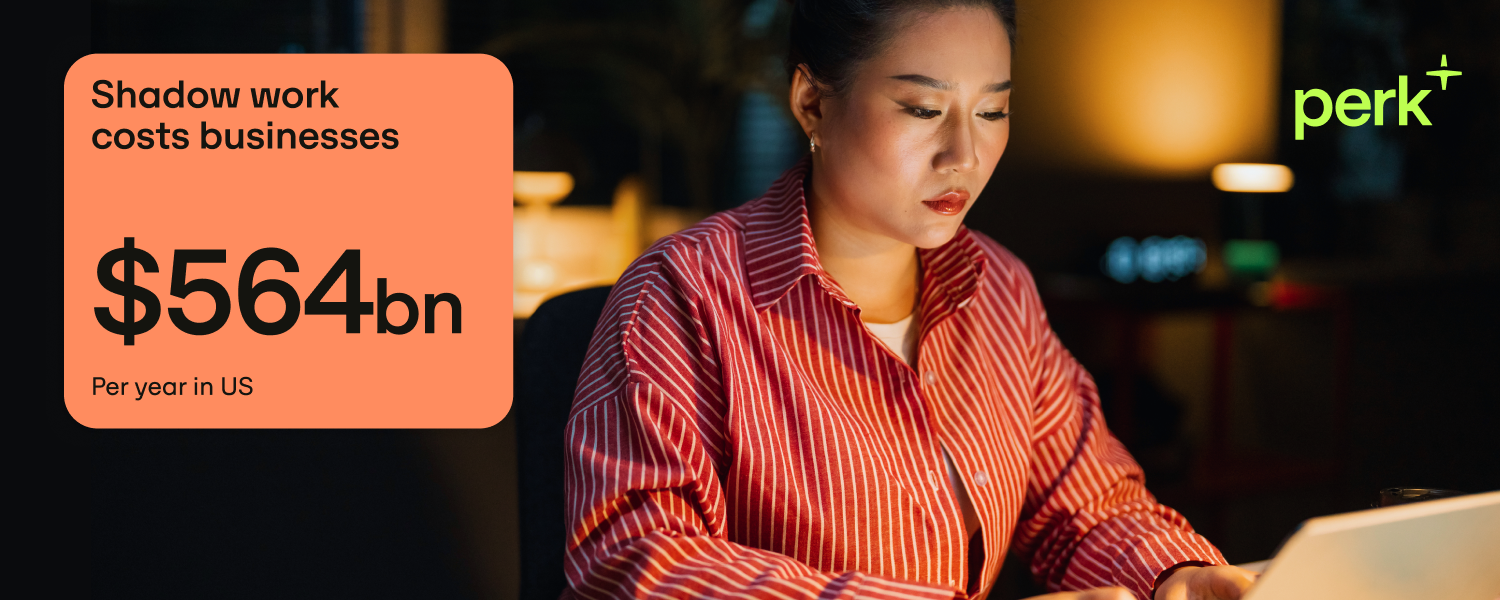
The 'work-behind-the-work' costing US businesses $564 billion
Expense reports. Receipt chasing. Travel paperwork. Invoice processing. Approvals.
Individually, they look like small tasks. Together, they take a surprisingly big bite out of the work week.
Forrester Consulting research commissioned by Perk found that non-core administrative work costs US businesses an estimated $564 billion every year.
We call it shadow work. More simply, it’s all the work that piles up around the work people were actually hired to do. And when that work is spread across disconnected systems, the cost shows up not just in time, but in lost focus and productivity.
Open Thread
- Drop in any links or comments of interest to Diff readers.
- What's the equivalent of "bug blindness" in other fields?
Diff Jobs
Companies in the Diff network are actively looking for talent. See a sampling of current open roles below:
- High-growth startup building dev tools for wrangling and debugging complex codebases is looking for someone who can personally execute the SaaS bear case: review the third-party software they use and figure out what to keep, what to drop, and what to implement in-house. (SF, DC)
- A top prop trading firm is looking for people who combine exceptional quantitative ability with the judgment and relationship instincts to build critical financial partnerships and lead high-stakes negotiations. Candidates may come from markets, finance, or further afield; what matters is this combination of abilities, strengthened by the perspective that comes with experience. (NYC)
- A top prop trading firm is looking for people with exceptional strategic thinking and quantitative skills to help the firm model and manage its financing risk and strategy. Open to candidates from a range of analytically demanding fields.(NYC)
- The next great American print magazine hyperstitioning abundance through gorgeous techno-futurist aesthetics and the highest quality long-form writing on entrepreneurship, technology, and capital is looking for a Chief of Staff to execute on a number of interesting growth projects. One day you’re standing up a physical bookstore (and modeling the attendant unit economics), the next you’re producing a podcast or mailing coffee table books to cultural tastemakers, throughout it all you’re focused on getting things done. If you have an operational / analytical toolkit (e.g, banking, consulting, startups) and want to work with a team shaping culture, please reach out. (Austin)
- Ex-Bridgewater, Worldcoin founders using LLMs to generate investment signals, systematize fundamental analysis, and power the superintelligence for investing are looking for machine learning and full-stack software engineers (Typescript/React + Python) who want to build highly-scalable infrastructure that enables previously impossible machine learning results. Experience with large scale data pipelines, applied machine learning, etc. preferred. If you’re a sharp generalist with strong technical skills, please reach out. (Remote)
Even if you don't see an exact match for your skills and interests right now, we're happy to talk early so we can let you know if a good opportunity comes up.
If you’re at a company that's looking for talent, we should talk! Diff Jobs works with companies across fintech, hard tech, consumer software, enterprise software, and other areas—any company where finding unusually effective people is a top priority.
And: we're now actively deploying capital into early-stage companies through Anomaly. Our focus is on defense, logistics, robotics, and energy. If you'd like to chat, please reach out.