

In this issue:
- Life with Nonzero Interest Rates—Capital has a cost, that cost varies, and different capital cost regimes suggest different behaviors. Right now, we're in a capital-intensive buildout and a period where the US has been willing to run large peacetime/non-recession deficits, and this changes some fundamental assumptions. But it's all part of a cycle that ultimately self-corrects.
- Stimulus—China is returning to a classic economic playbook.
- Ads—Apple continues to make it relatively hard to be in a single layer of the ad stack, but relatively easier to profit from ads at scale.
- Gambling—Prediction markets let users bet on many things, but one of the attractions is markets that are basically designed to be complicated random number generators.
- Acqui-Hires—We'll get some useful legal precedents soon.
- IPOs—The fact that AI companies are anxious to raise capital does not change the fact that their backers also want to deploy it.
Talk to this post with Read.Haus.
This issue of The Diff is brought to you by our sponsor, Perk.
Life with Nonzero Interest Rates
Interest rates are finance's answer to a fundamental force like gravity. They put the economy in an elliptical orbit around its sustainable growth rate, dragging different things in different directions depending on how far from optimal we are. Rates, overall, reflect the market's consensus view about the costs and rewards of deferred consumption. Because they're a single-dimension compression of a many-dimensional phenomenon, you can tell plenty of stories about a given change in rates, and because so many of these forces offset each other, you can plausibly explain 100% of the net change in rates by only looking at a specific cause.[1] From the perspective of households, rates are a way to think about the supply and demand of savings: high rates mean that people want to spend rather than save, and if that what you want to spend on is some durable asset—usually a house, but cars and other big durables count—then you're paying a lot to tie up capital for so long. Low rates are a way for savers to basically beg people to find something, anything, useful to do with money. "You can't find a way to make money if your cost of capital is 4%? Fine, anything you can do at 3.5?" For companies, it's a similar signal, about whether to retain or return capital: if you can mechanically grow earnings per share at, say, 10% a year merely by buying back stock, why bother doing anything else? And if the market says that doing that retires 2% of your shares each year instead, the market is also saying that you should invest more. Rates tell the government when to get its fiscal house in order by reducing spending and controlling inflation, or when the real problem is slow growth and a substantial deficit can be tolerated for a long time.
But rates go deeper than that. A few weeks after ChatGPT came out, The Diff wrote about how technologies you can describe as "a solution in search of a problem" are a low-rates phenomenon, specifically because low interest rates mean there's a smaller difference between an investment that starts producing returns in five years or in fifteen. This encourages exploratory research, like spending money on statistical models of text that show promise in fields like spellcheck and translation—maybe in a few years they'd be useful for something else, like autocomplete!
Attention is All You Need was published in June 2017, when the ten-year yielded 2.3%. It hasn't had a two-handle since mid-2022, and in the last few months, rates have shot up higher. It's annoyingly difficult to trace this rise in rates directly to AI capex. PIMCO doesn't see AI-related borrowing crowding out other kinds of funding; treasuries aren't selling off because everyone's dumping them to invest in the latest Nebius convertible issue or whatever. AI-related borrowing was about 40% of total corporate debt issuance in the first half of this year, compared to 20% for last year. But that makes it about 6% of total borrowing—pretty meaningful if you work in fixed income, but not something that can trivially explain the rise in rates. You can extend this a bit and get more compelling numbers, because prior to the burst of capex, one of the criticisms of companies now investing heavily in AI was how much lending they were doing: they accumulated large balances of cash and cash equivalents, with "and equivalents" meaning mostly short-term debt. If they're drawing down cash balances to fund AI investment, that's additional net borrowing, but that doesn't quite double the sum they explicitly borrowed. Meanwhile, if you look at net nonfinancial borrowing, AI-linked companies were about 9% of it and the US government was 44%.
So the rates situation looks like an old-fashioned problem—government spending as a share of GDP hitting a level in a boom that was previously associated with recessions: the deficit was 5.7% of GDP last year, a little higher than in 2012 (6.6%) but otherwise a level that, prior to the financial crisis, had only been achieved in wartime. New Deal-era deficits peaked at around 5% of GDP, the lows in 1983—a mix of tax cuts, higher defense spending, and a recession pushed it to 5.7%—and is otherwise unprecedented for the US. If the government is spending money without recapturing that in tax revenue, unemployment is low, and the biggest growth industries are bottlenecked, the natural result is both higher real rates (because there are more investments competing for capital) and higher inflation.[2]
Higher real rates may or may not be directly caused by AI, whether directly or through second-order effects.[3] But it's an appropriate circumstance, particularly if inflation is a big component. Because some costs are fixed through borrow and long-term contracts, and since companies and workers are averse to pay cuts rather than layoffs, higher inflation tends to accelerate the reshuffling of resources in the economy, by reducing the real income of everyone outside of the sectors where there's enough growth that employees can negotiate raises. It basically puts the economy on a threshold dose of psychedelics, causing everyone to take a step back and get more perspective. What the non-inflation component of rates tells you is that now is a time for choosing deployment over research, because the timing of the payoff is more certain. High rates are terrible for the present value of long-term research and development, and do a lot less to the expected return of some cost-cutting project that's going to pay for itself in a few months. Capabilities will continue to advance, of course, and we'll find uses for whatever new models come out. But in the immediate future, more capital can shift to figuring out what to do with current models. Interest rates are the price of time, and sometimes the future is cheap from a distance but expensive once it gets here.
For example, suppose that the yield of the 10-year rises 10 basis points, and that's the net result of three things each pushing rates down 10bps, one increasing them by 10bps, and one increasing them by 30bps. You can both explain the change entirely by looking at the +10bps change, and also miss whatever the biggest issue is. ↩︎
One question you can ask here is: What about the late 19th century, when the world was undergoing a massive capex binge and UK perpetuities yielded 2.26%? Part of the answer is that this was under the gold standard, which is deflationary when output is growing faster than gold supplies, as it was then. The UK's government also tended to run a surplus outside of wartime, so there wasn't new supply. But there was demand, because they were the global reserve currency and had the world's most important financial center. The low point in UK rates was also caused by a flight to quality after the other time Barings got into trouble with adventurous foreign investments. ↩︎
Such as: people raising their assumptions about their future income growth and equity market gains, and decreasing their savings rate in response; businesses using much the same logic to expand faster than they otherwise would; bond investors worrying that Donald Trump is too bullish on AI and expects the US to outgrow a borrowing binge; or every complement to every step of the buildout getting bid up. ↩︎
You're on the free list for The Diff! Last week, paying subscribers read about the two pricing strategies consumer-facing companies use ($), thoughts on Meta as an enterprise AI company ($), and how publicly-traded sports companies will think about capital allocation ($). Upgrade today for full access.
A Word From Our Sponsors
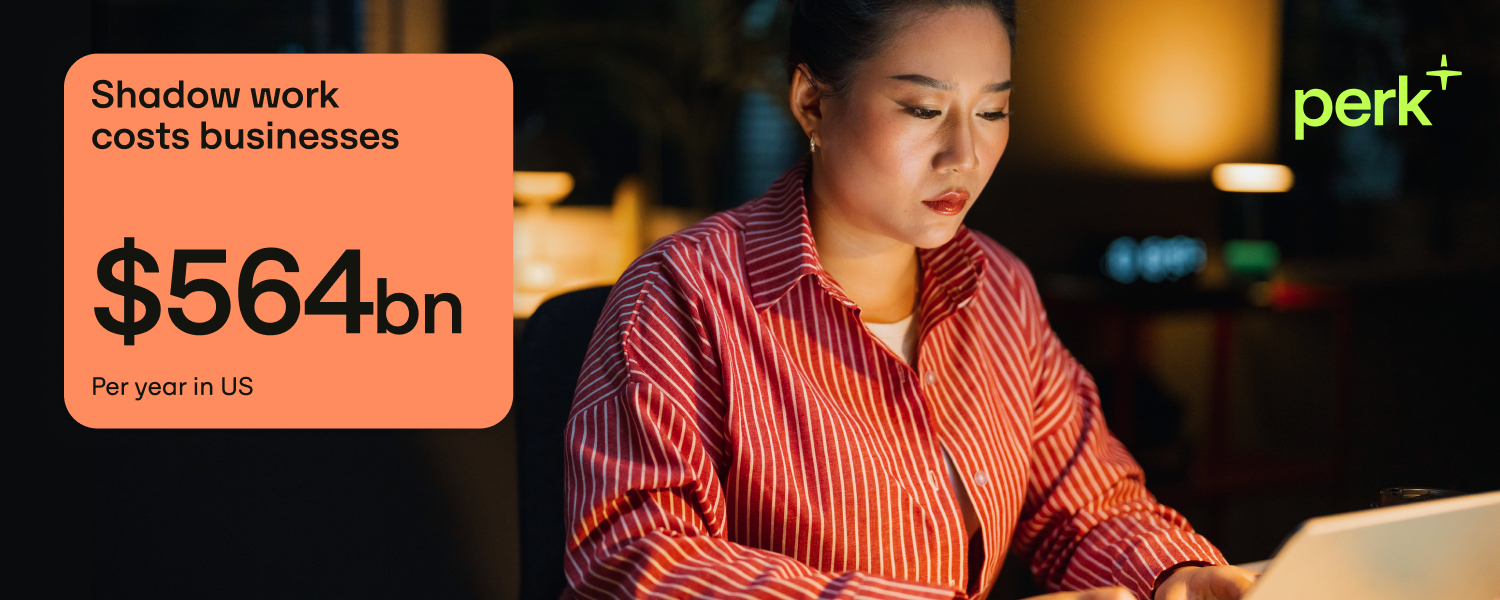
Your team loses 7 hours a week to shadow work.
Forrester Consulting research commissioned by Perk found employees spend an average of seven hours every week on expenses, approvals, invoices and travel paperwork. That’s about nine working weeks a year, per person.
This is what we mean by shadow work: the repetitive "work behind the work" surrounding people’s actual jobs. It often feels too small to measure one task at a time, but across a company, those minutes add up quickly.
The opportunity isn’t to get people better at this manual work. It’s to give them less of it to do.
Elsewhere
Stimulus
China plans to spend about 3% of its GDP through 2030 on some big infrastructure projects ($, Economist). This has been a part of China's economic toolkit for a long time, to the point that they've worked their way very far down the list of viable infrastructure projects. It's usually led to overinvestment and low returns. On the other hand, this displays some optimism from China about what global economic growth looks like: if they're going to increase their capacity to produce more goods, the world will need to absorb them. Since at least some GDP growth tail risks come from China's policies, it's a way to bet on a positive slant to the status quo.
Ads
Apple has been blocking connections to some advertisers in iOS, and has set itself up to add more to the list. Apple's behavior here does keep users' information more private, but it actually strengthens their most serious strategic threats, because it makes scale and vertical integration more valuable. The big platforms have a lot of data about their users, and can monetize it plenty on services they own. It's the publishers who rely on third-party ads, and the companies that advertise with them, who do worse from this. It's a dangerous time for Apple to give the big platforms an advantage, because the question of which form factor will dominate computing is more up in the air than it was a few years ago.
Gambling
NPR has a piece on problem gamblers who discovered Kalshi and Polymarket, with their central case being someone who put himself on sportsbooks' self-exclusion lists but had to badger Kalshi support to delete his account and ban him from the site. The market he ultimately chose is one of the purest gambling markets on the platform, in which traders bet on whether Bitcoin will rise or fall over the next fifteen minutes. This is, naturally, something that can be hedged, albeit imperfectly, by trading Bitcoin. And once there are hedgers, the modeling will get more complicated, traders will start faking out and otherwise exploiting one another, and the result is that the whole thing is a random number generator that will occasionally produce patterns, but only temporarily and by accident. That's what slot machine designers go for, and if that's where these sites' users end up, then it's clear what they're there for.
Acqui-hires
Two engineers from the surviving entity of Groq, much of which was acqui-hired by Nvidia in a deal announced late last year, are suing ($, FT). They note that there aren't good precedents around these deals, which makes the lawsuit a healthy one. It is, in principle, possible to construct a transaction like this, where IP and/or key employees leave, investors get cashed out, and the sum of the value of that deal plus what's left is more valuable than the original company would have been. But it's also very possible for these deals to be one-sided and asymmetric; they're similar in spirit to corporate spinoffs, and for a while spinoffs were an incredibly attractive place for fundamental investors to focus their time and attention: they tended to be misunderstood and thus mispriced, with sellers who weren't always economically rational. That changed over time, and now the spinoff world is better-understood, and thus harder to take advantage of. Spinoffs, though, involve public markets, where there's more transparency and it's easier to judge the results. Acqui-hires will take a long time to replicate that, and setting a few legal precedents about which deals stand and what makes them fair is a good thing.
Disclosure: long NVDA.
IPOs
Australian AI company Firmus is going public, but expects existing investors to take about half the deal. As much attentio as there is to AI infrastructure's voracious demand for cash, it's worth noting that there's still a large supply of cash looking for more AI exposure, too. The market is moderating a lively debate about the terminal value of GPUs, and the return on incremental watts, and there are still big participants with healthy balance sheets who want more of this exposure.
Diff Jobs
Companies in the Diff network are actively looking for talent. See a sampling of current open roles below:
- Series A startup building multi-agent simulations to predict the behavior of hard to sample human populations is looking for researchers and engineers (ML, platform, infrastructure, etc.) to improve simulation fidelity and scale the platform to hundreds of millions of simulation requests. Problem-solving and genuine interest in simulation matter more than pedigree. Experience working with languages with an algebraic type system is a plus. (NYC)
- General Catalyst backed founder is looking for technical generalists who are excited about creating a fully autonomous firm. If you want to own the entire process of identifying, instrumenting, steering, and monitoring post-PMF businesses that run autonomously, and study how machine intelligence actually behaves in the real economy, this one is for you. (SF or Remote)
- a16z, Sequoia, Thrive-backed next generation pharma company that instruments the best drug hunters in the world with deterministic software, data and AI to accelerate the process of acquiring, developing, and monetizing promising therapeutics (three active immunology programs) is looking for senior software engineers. If you are excited about sublinear headcount scaling and building technology that drives therapeutic abundance, please reach out. (Boston, NYC, SF)
- Well-funded, frontier AI neolab working on video pretraining and computer action models as the path to general intelligence is looking for researchers who are excited about creating machines that learn from experience, not text. Ideally you have zero-to-one pre-training experience and/or are a high-slope generalist who’s frustrated that the big labs aren't doing this. (SF)
- Lightspeed-backed team building the engineering services firm of the future is looking for founding members of technical staff excited about working alongside civil engineers to translate their domain expertise into the operating system that powers the next era of great American infrastructure. If you’re an engineer with strong product intuition, who's energized by access to users, and excited by the prospect of transforming how we design and construct our built world with frontier AI, this is for you. (NYC, SF or Remote)
Even if you don't see an exact match for your skills and interests right now, we're happy to talk early so we can let you know if a good opportunity comes up.
If you’re at a company that's looking for talent, we should talk! Diff Jobs works with companies across fintech, hard tech, consumer software, enterprise software, and other areas—any company where finding unusually effective people is a top priority.
And: we're now actively deploying capital into early-stage companies through Anomaly. Our focus is on defense, logistics, robotics, and energy. If you'd like to chat, please reach out.